Artificial intelligence is no longer a distant promise. In 2026, it has become one of the most powerful forces shaping the global economy. Its impact is no longer limited to technological breakthroughs, but extends to how we work, produce, and compete as societies.
Companies such as OpenAI, Google, and Microsoft are leading a fast-paced race to develop increasingly advanced AI systems. The stakes are high: those who dominate artificial intelligence may gain a strategic advantage comparable to past industrial revolutions or the rise of the internet.
From a productivity perspective, AI is achieving something few technologies have managed: improving efficiency across multiple industries simultaneously. From healthcare diagnostics to financial analysis and process automation, its ability to process vast amounts of data is redefining what it means to work. However, this progress raises an uncomfortable question: what will happen to millions of jobs that depend on repetitive or analytical tasks?
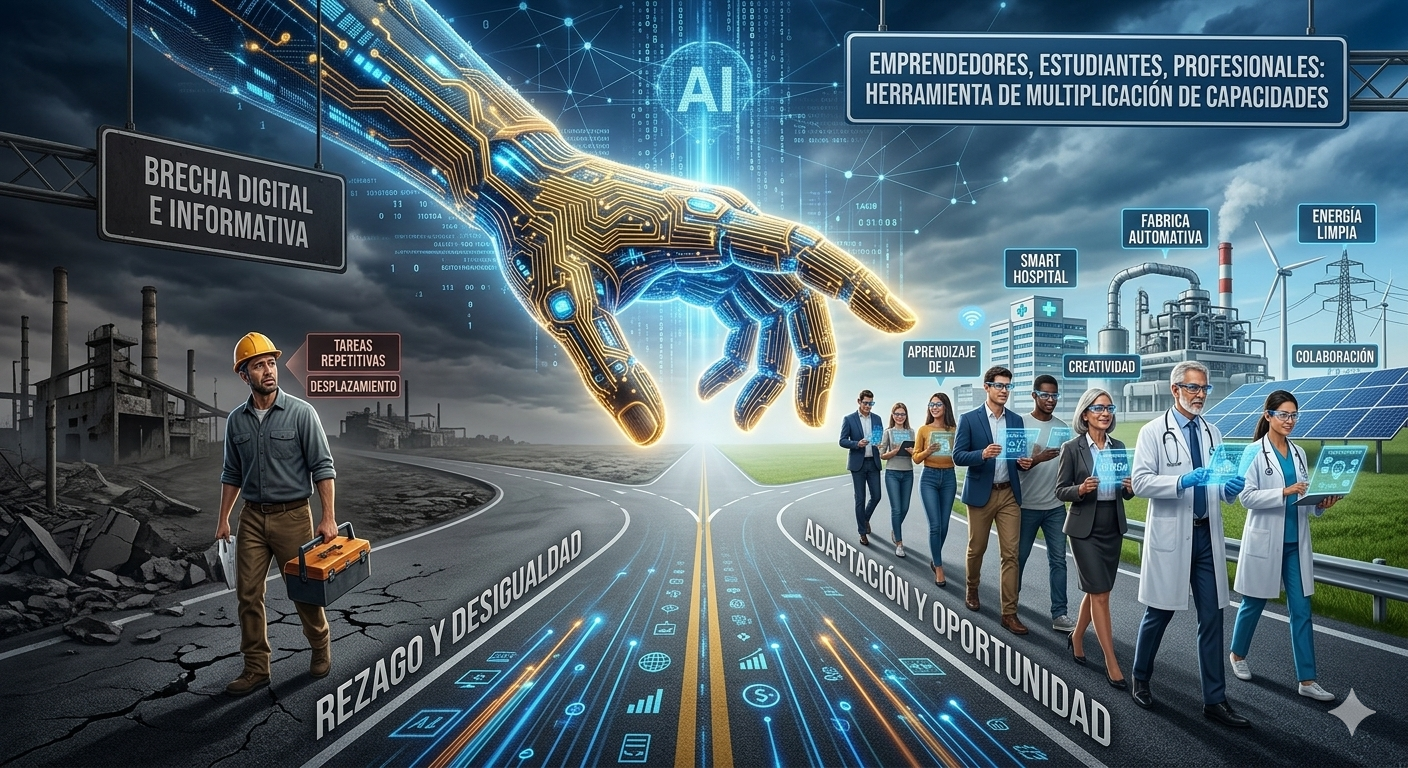
The tech industry often argues that artificial intelligence does not destroy jobs, but transforms them. In theory, this is true. In practice, however, the speed of change may outpace the ability of workers to adapt. This creates one of the biggest challenges of our time: the growing gap between those who understand and use AI, and those who are left behind.
At a global level, artificial intelligence is also reshaping the balance of power. Countries that invest in technology, data, and talent are positioning themselves as leaders in the new digital order, while others risk becoming technologically dependent. This dynamic introduces a new form of inequality — not only economic, but also informational.
Yet within this transformation lies a historic opportunity. Never before has it been so accessible to create, automate, and scale ideas with relatively limited resources. For entrepreneurs, students, and professionals, artificial intelligence can act as a multiplier of capabilities, lowering barriers and enabling global competition.
The key is not to resist change, but to understand it. Learning how to use AI, integrating it into productive processes, and developing complementary skills will be essential in the coming years. The difference between those who benefit from this revolution and those who are displaced will largely depend on their ability to adapt.
In conclusion, artificial intelligence is not just a technological innovation; it is a structural shift in how economies and societies function. Ignoring it is not an option. Understanding it, however, may be one of the most important decisions for the future.
